TEMPO.CO, Jakarta - Even the world's established democracies are increasingly sliding into corruption. Transparency International's 2025 Corruption Perceptions Index (CPI), published on Tuesday, shows a troubling erosion of leadership in combating corruption in the West.
The 31st edition of the CPI ranks more than 180 countries and territories on perceived levels of public sector corruption, showing declines for longstanding strong performers, including the United States, Canada, the United Kingdom and Sweden.
The 2025 index found that the number of countries scoring above 80 — once a benchmark for clean governance — has shrunk dramatically from 12 a decade ago to just five this year.
Although Denmark achieved the highest score (89) for the eighth year in a row, closely followed by Finland (88) and Singapore (84), Transparency International decried a lack of "bold leadership" globally, which it said was weakening efforts to tackle graft.
"Several governments no longer see the fight against corruption as a priority," Francois Valerian, chair of Transparency International, told DW. "Governments may have had the impression that ... they had done everything to address corruption and had to turn to other priorities."
Why Is the US Falling in Global Corruption Scores?
The CPI index, which ranks each nation on a scale from 0 (highly corrupt) to 100 (very clean), shows the US dropped to its lowest-ever score of 64, down 10 points from 2016.
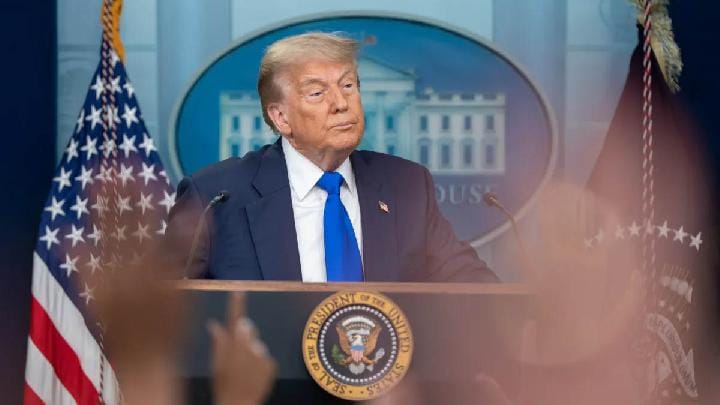
Transparency International noted that the US political climate has been deteriorating for more than a decade and said the latest data doesn't fully reflect developments since US President Donald Trump returned to the White House last year.
Although the US ranking stayed stable for most of the Biden administration, previous reports highlighted high-profile ethics scandals at the US Supreme Court as responsible for a large drop last year.
"We can't blame everything on Trump because there were concerning reforms that started before him," Valerian told DW.
The report did, however, cite the "use of public office to target and restrict independent voices," ... "the normalisation of conflicted and transactional politics," ... "the politicisation of prosecutorial decision making ... and "actions that undermine judicial independence." The anti-corruption body said these moves "all send a dangerous signal that corrupt practices are acceptable."
Since beginning his second term, Trump has taken action that aligns with those concerns, including dismantling public broadcasters like Voice of America and weaponizing government agencies against political opponents, including the Biden administration and other top US officials.
He also been accused of undermining judicial independence and weakening enforcement of the Foreign Corrupt Practices Act (FCPA), which was originally passed to stop US citizens and entities from bribing foreign government officials to win contracts.
In an interview with DW, Valerian criticized Trump's use of an executive order to revise the FCPA and turn it into a national security tool. He also singled out the Republican president's support for cryptocurrencies like Bitcoin — often used for money-laundering — and a fast-track immigration program for wealthy foreigners, dubbed by critics the Trump Gold Card.
"Based on our international experience, such [visa] schemes attract corrupt people and may also attract criminals," he said.
Why Is Europe’s AntiCorruption Drive Stalling?
Over the same decade, the largest drop in perceived corruption in the West was in the UK. The country has fallen 11 points to 70, which Transparency International said was linked to ongoing failures to enforce ethical standards for ministers, lawmakers and other government officials.
It also cited COVID-19 procurement scandals, where people close to power were able to secure lucrative contracts to supply personal protective equipment (PPE) with little scrutiny.
Other Western nations to see large ranking drops over the past 10 years are New Zealand, down nine points to 81, Sweden, which dropped eight points to 80 and Canada, which fell seven points to 75. Germany's decline over the past 10 years is a more modest four points to 77. The country rose 2 points from last year.
The index recorded a four-point decline in France, falling to 66 over the past decade, citing falling corruption enforcement and growing risks of collusion between officials and private interests.
The report did hail the conviction of former French President Nicolas Sarkozy over the receipt of illicit funds, including from the late Libyan leader Moammar Gadhafi, which were used to help Sarkozy campaign for the presidency.
"Many [European] countries were leading the fight against corruption," Valerian lamented, noting that the EU's Anti-Corruption Directive has been watered down and won't allow Europe to "strengthen efforts against graft."
Where Else Is Momentum Against Corruption Being Lost?
The report noted that 50 countries have recorded significant drops in the rankings since 2012, notably Turkey, Hungary and Nicaragua, due to democratic backsliding, weak institutions and rule of law, cronyism and rent-seeking.
Corruption is increasingly opening the door for organized crime to penetrate Latin American politics, Transparency International warned, noting that even Costa Rica and Uruguay — long considered the region's strongest democracies with top CPI rankings — are now experiencing the kinds of corruption pressures seen in Colombia, Mexico, and Brazil.
The report said the declines are "sharp, enduring and difficult to reverse, as corruption becomes systemic and deeply embedded in both political and administrative structures."
Valerian expanded on this to DW: "The more concentrated your power is, the higher the abuse of power. And the more secretive your power is, the easier it is to abuse that power."
The new index doesn't reflect the latest tranche of Jeffrey Epstein files, released last month, which have implicated officials in several countries in alleged wrongdoing, corruption or compromising ties to the convicted pedophile.
The anti-corruption body also lamented political interference with the operations of non-governmental organizations (NGOs), especially those critical of the government of the day. The report noted an increase in crackdowns and funding cuts for NGOs in Georgia, Indonesia and Peru.
In certain countries, the report warned, it is becoming harder for independent journalists, civil society groups and whistleblowers to speak out against corruption.
Ukraine's antigraft push drew praise, even as the country continues to fight off Russian aggression. Recent defensesector scandals show that corruption remains a problem.
Yet the fact that these cases are surfacing publicly and moving to prosecution indicates that the country's new anticorruption framework is beginning to take hold, the report said.
"One country — Ukraine — has decided to fight against corruption, while Russia chose the opposite path," Valerian said, noting how Moscow had scrapped laws meant to prevent and punish graft.
Russia remains near the bottom of the CPI, scoring 22, while Ukraine's score was 36, a rise of 7 points over the past decade.
How Do the LowestRanked Countries Fare?
Transparency International also noted that authoritarian regimes, including those in Venezuela and Azerbaijan, largely perform the worst in the rankings, as "corruption is systemic and manifests at every level."
In the latest index, more than two-thirds of nations fell below 50, which the report said indicated "serious corruption problems in most parts of the planet."
It noted that countries ranked under 25 are mostly affected by conflict and highly repressive regimes, including Libya, Yemen and Eritrea, which all scored 13, along with Somalia and South Sudan, which both scored nine.
On the positive side, the report highlighted how many countries have climbed from the bottom toward the middle of the ranking, including Albania, Angola, the Ivory Coast, Laos, Senegal, Ukraine and Uzbekistan.
It also noted long-term gains from nations with already high scores, including Estonia, South Korea, Bhutan and Seychelles.
Read: Transparency Intl: Sudan, Somalia Topped the Most Corrupt; Denmark Led Corruption-Free Countries
Click here to get the latest news updates from Tempo on Google News