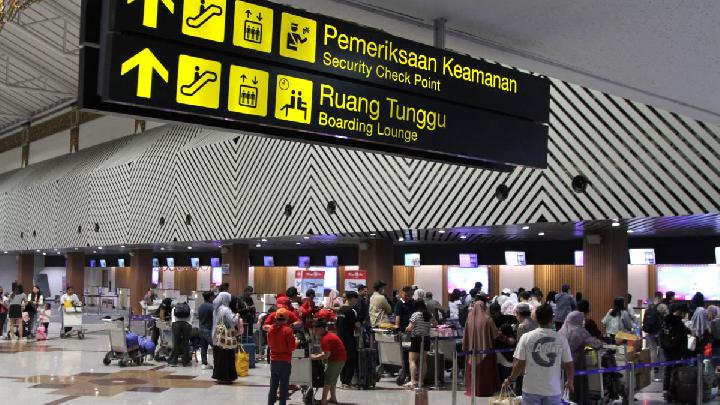
TEMPO.CO, Jakarta - Singapore's Communicable Disease Control Agency (CDA) will install temperature-screening devices at several of the country's international airports for screening passengers from areas affected by Nipah virus infection. The agency is also issuing health advisories to travelers at entry points to Singapore as part of efforts to prevent the spread of the virus, which has emerged in West Bengal, India.
"Travelers who experience symptoms during or after travel should seek immediate medical attention and inform their doctor about their recent travel and potential exposure to raw date palm sap, bats, or sick people," the CDA advised in a statement quoted by Mothership on Wednesday, January 28, 2026.
In its statement, the CDA noted that the outbreak in West Bengal has been reported to be human-to-human, with two cases so far. In the current outbreak, transmission has reportedly occurred within hospitals and remains localized in West Bengal, with no sustained community transmission currently reported.
The statement explained that infection is primarily caused by exposure to bats and consumption of date palm sap or fruits contaminated by bats.
Screening at Asian Airports
Several other regions in Asia are also increasing precautionary measures at airports. Thailand has begun screening passengers arriving from affected or high-risk areas and has tightened public health surveillance.
As reported by The Independent on Wednesday, January 28, 2026, Thailand has screened approximately 1,700 incoming travelers. No infections have been found so far. If any travelers develop symptoms, authorities will transfer them to designated quarantine facilities for further testing. Passengers arriving from West Bengal will also be issued a Health Alert Card, which explains what to do if they develop symptoms.
Malaysia said it is maintaining border health controls and monitoring developments through official channels, including the World Health Organization (WHO).
Nepal has also increased health screening for passengers entering the country through Tribhuvan International Airport (TIA) and its border with India. "We have particularly stepped up surveillance at border points in Koshi Province. Health screenings have also been ordered for people entering Nepal through other border crossings," said Prakash Budhathoki, a spokesperson for the Ministry of Health and Population, as reported by The Himalayan Times.
Taiwan's Centers for Disease Control and Prevention (CDC) classifies Nipah virus as a Category 5 disease with a significant public health risk, requiring special control measures. Although travel is not completely restricted, the government is urging travelers to remain vigilant and implement safety measures.
Hong Kong's Center for Health Protection (CHP) has also conducted health screenings on passengers arriving from India. The CHP has robust surveillance and notification mechanisms to identify infectious diseases.
Nipah virus is not highly contagious but can spread from animals to humans, through close human-to-human contact and through contaminated food. According to the WHO, the virus has an estimated fatality rate of between 40 percent and 75 percent, based on previous outbreaks. Symptoms of the virus vary, ranging from asymptomatic or mild infection to acute respiratory illness and fatal brain inflammation.
Read: Nipah Virus Cases in India Prompt Airport Health Checks in Asia
Click here to get the latest news updates from Tempo on Google News