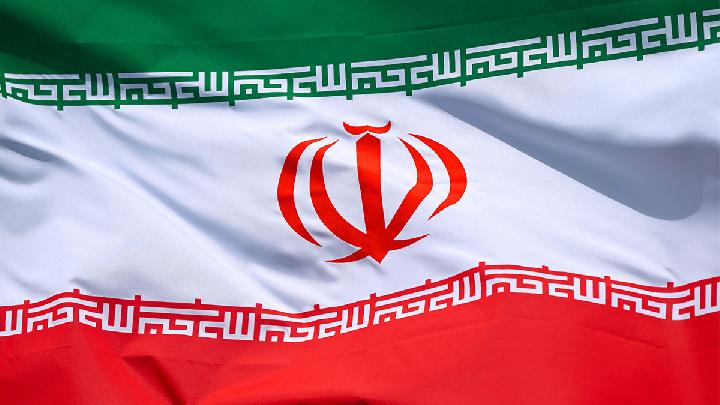
TEMPO.CO, Jakarta - EU foreign ministers were expected to agree Thursday to designate Iran's Islamic Revolutionary Guard Corps (IRGC) as a "terrorist" group, the EU's foreign policy chief, Kaja Kallas, said.
Meeting in Brussels ahead of the expected decision, the ministers also voted to add 15 individuals and six "entities" to an asset freeze and visa ban blacklist.
What does the EU's terror listing mean for the IRCG?
The designation, which would be largely symbolic, is in response to the brutal clampdown on anti-government protests in Iran in January, in which thousands of people have been killed.
"If you act as a terrorist, you should also be treated as terrorists," Kallas told reporters ahead of the meeting.
Kallas, the former Estonian prime minister, who now serves as the EU's high representative for foreign affairs and security policy, said the measure would put the IRGC "on the same footing" as terror groups such as al-Qaeda, Hamas and the so-called Islamic State.
What is the IRGC?
The IRGC is the ideological branch of Tehran's security forces. It was created after the 1979 revolution to protect the clerical leadership and uphold the regime's Shia Islamist ideology and the principles of the revolution.
The IRGC's volunteer Basij force is widely seen as being crucial to suppressing the protests.
The anticipated move by the EU to blacklist the Revolutionary Guard comes after France and Italy said they would support the measure, after previously resisting it.
France, in particular, had been hesitant to designate the IRGC as a terror group over concerns about how that would affect Europeans detained in Iran. France is also keen to maintain diplomatic relations with Tehran.
"The estimate is that still the diplomatic channels will remain open even after the listing of the Revolutionary Guards," Kallas said.
Why is the EU blacklisting the IRGC?
France's Foreign Minister Jean-Noel Barrot told reporters in Brussels on Thursday morning that Paris was supporting the terror designation as "there can be no impunity for the crimes committed" by the clerical regime.
Barrot added that the decision can also be viewed as an "appeal by France to the Iranian authorities to release the prisoners thrown by thousands into the regime's prisons, to end the executions that are perpetuating the most violent repression in Iran's modern history."
The French minister also urged Iranian authorities to end an internet blackout, which was first imposed in early January in a bid to quell the unrest.
German Foreign Minister Johann Wadephul, for his part, said he is "very pleased" that the terror designation looks set to "finally go ahead," adding that he was "very confident" EU members would be able to reach a "joint conclusion."
"This is a success for the people of Iran. It is a success for humanity and it is also a success for the EU as a community of values," Wadephul said.
What do we know about the latest sanctions?
Among those on the list of 15 individuals sanctioned on Thursday were Interior Minister Eskandar Momeni, Iran's prosecutor general Mohammad Movahedi-Azad, General Ali Abdollahi Aliabadi, who is head of Iran's joint command headquarters, and Iman Afshari, a presiding judge.
The new listings also include several senior commanders from the Revolutionary Guards and top police officials.
"They were all involved in the violent repression of peaceful protests and the arbitrary arrest of political activists and human rights defenders," the European Council said.
The restrictive measures include asset freezes, travel bans to the EU for individuals, and prohibitions on making funds or economic resources available to those listed.
The six entities listed include Iran's media regulator, state-linked online influence groups, a government internet filtering committee, and several software companies.
"These entities were involved in censoring activities, trolling campaigns on social media, spreading disinformation and misinformation online, or contributed to the widespread disruption," it added.
Hundreds of Iranian officials and state entities have already faced EU sanctions over previous crackdowns on protests, as well as Iran's backing for Russia's war in Ukraine. As the EU has already placed financial sanctions on the IRGC and many of its senior commanders, the terror designation is unlikely to have much impact on the Guards.
What has been happening in Iran?
Thousands of people have been killed by Iranian security forces since protests against the dire economic situation began in late December.
The protests quickly grew into anti-government demonstrations and calls for regime change.
While Iran admits that over 3,000 people have died during the unrest, authorities say the majority were either security personnel or bystanders killed by "rioters" and "terrorists."
Rights groups dispute the clerical regime's version of events. The US-based Human Rights Activists News Agency (HRANA) said at least 6,373 people—of whom 5,993 were protesters—have been killed, warning that many more are feared to have died in the unrest.
Some estimates by rights groups place the death toll in the tens of thousands.
The communications blackout has hindered independent verification of the full extent of the crackdown.
On Thursday, the foreign ministers of the EU's 27 member states will also discuss the Russian aggression against Ukraine, as well as the situation in the Middle East.
Read: Trump Makes New Threats Against Iran Over Nuclear Deal
Click here to get the latest news updates from Tempo on Google News