TEMPO.CO, Jakarta - With the death of Nemesio Ruben Oseguera Cervantes, better known as "El Mencho" — one of Mexico's most powerful drug lords — the government's long-standing policy of rapprochement with drug cartels appears to have ended.
While US Deputy Secretary of State Christopher Landau hailed the operation as a "great development for Mexico, the United States, Latin America and the entire world," concerns are now on the rise over the prospect of a new drug war in the country. Suspected members of El Mencho's cartel have been spreading fear and violence across large parts of the country, killing dozens of people.
Who was "El Mencho"?
As head of the Jalisco New Generation Cartel, or Cartel Jalisco Nueva Generacion (CJNG), Oseguera Cervantes was one of the most powerful figures in the global drug trade.
According to the investigative platform InSight Crime, the former police officer served time in the United States in the 1990s on drug charges.
However, compared with other drug lords such as Joaquin "El Chapo" Guzman and his sons, Oseguera Cervantes, who was 59 when he was killed, preferred a relatively discreet life. Despite this, several of his family members have been arrested and convicted on drug charges or related crimes such as money laundering in Mexico and the United States.
Notwithstanding repeated rumors of Oseguera Cervantes' death, authorities had continued investigating in the past. Most recently, the US State Department offered a reward of up to $15 million (€12.7m) for information leading to the capture of the cartel boss.
How influential is CJNG?
Oseguera Cervantes established the CJNG around 2010 in Mexico's western state of Jalisco. He then expanded its sphere of influence into neighboring states through violent clashes with rival cartels. The partly militarized CJNG is now active in nearly all parts of the country and ranks among the most powerful criminal organizations in the Western Hemisphere.
In 2025, the United States designated the CJNG, along with seven other Latin American gangs, as a foreign terrorist organization.
The criminal group is accused of human trafficking, fuel theft and extortion. It's main source of revenue, however, is allegedly drug smuggling into the United States — as well as the crimes required to facilitate that trade such as coercion, kidnappings, torture and killings.
Among Mexico's drug cartels, the CJNG is regarded as particularly brutal. The Swedish Uppsala Conflict Data Program attributes more than 75,000 deaths to the cartel — more than the Sinaloa Cartel, which has existed since the 1980s.
How was El Mencho killed?
According to official statements, special forces from the National Guard were attempting to arrest Oseguera at a ranch when a shootout erupted. Four cartel members were killed and several others wounded. El Mencho reportedly died of his injuries while being transported to a hospital.
According to information from Mexico and Washington, US authorities supported the operation with intelligence.
What happens to cartels without a leader?
Following the death of El Mencho, alleged members of the cartel started spreading fear and violence across large parts of the country, killing dozens of people. However, observers say such a geographic spread is rare. Also targeted operations in tourist hotspots such as Puerto Vallarta and Acapulco are considered unusual, although clashes between drug gangs have become more frequent even in those areas.
Yet, it is not the first time a cartel has demonstrated strength following a major government operation.
In 2019, members of the Sinaloa Cartel forced the release of their arrested leader, Ovidio Guzman Lopez — a son of Joaquin Guzman, known as "El Chapo" — by terrorizing Culiacan, the capital of the state of Sinaloa, and taking hostages. In 2023, El Chapo was eventually captured and extradited to the United States.
The timing of the strike
The strike on Oseguera Cervantes marks a stark contrast to the drug policies pursued by the Mexican government during the presidency of Andres Manuel between 2018 and 2024.
However, the unofficial appeasement of drug cartels under the slogan "hugs, not bullets" (Spanish: Abrazos, no balazos) failed to reduce the murder rates, which had risen sharply since 2010. The United Nations Office on Drugs and Crime recorded more than 30,000 homicides per year in Mexico between 2017 and 2023.
Until recently, Manuel's successor and party colleague Claudia Sheinbaum had also ruled out a "war on drug dealers" as illegal.
But since taking office in late 2024, the army has acted "much more confrontationally and aggressively against criminal groups in Mexico," David Mora, a Mexico analyst at the International Crisis Group, told the news agency AP.
In his view, the strike against "El Mencho" is a "turning point."
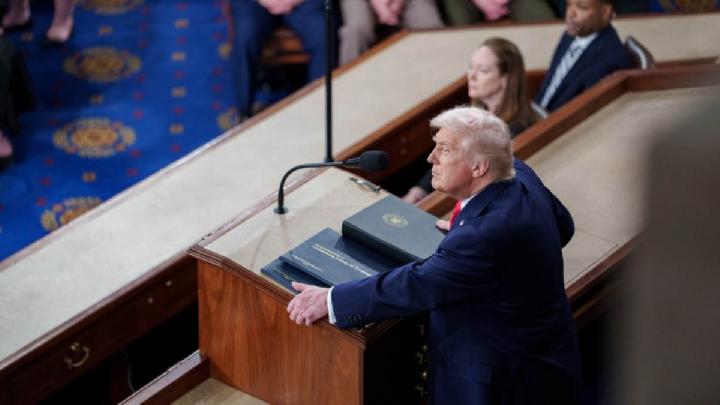
Observers now fear that Mexico could be facing a new level of violence following growing pressure from the United States. Recently, President Donald Trump threatened to use US military force against cartels in Mexico if the country did not do more to curb drug smuggling into the US.
Read: Mexican President Weighs Lawsuit Against Elon Musk Over Cartel Claims
Click here to get the latest news updates from Tempo on Google New