TEMPO.CO, Jakarta - The phenomenon of microplastic-contaminated rainfall has been a hot topic of discussion since late 2025. Researchers found microplastic content in rainwater across several regions in East Java, posing dangers if consumed. The East Java Provincial Government has responded to these findings.
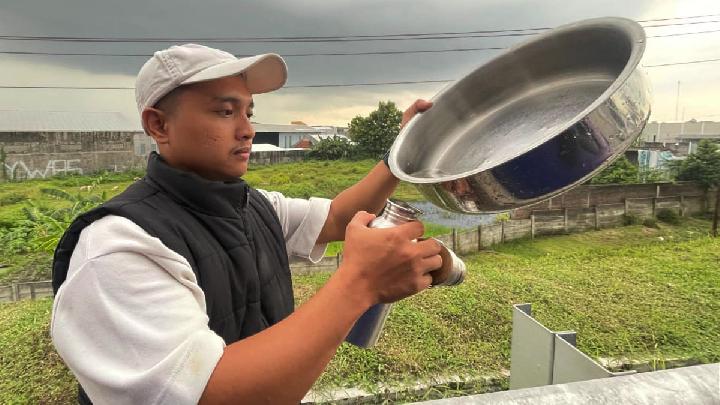
One group of researchers identifying microplastics in rainwater is the Gen Z Reject Single-Use Plastic Network (Jejak). They examined rainwater in 10 East Java cities, namely Surabaya, Gresik, Mojokerto, Lamongan, Malang, Kediri, Tulungagung, Jember, Bondowoso, Trenggalek, and Banyuwangi, throughout November 2025.
"The results showed that all rainwater in the 10 cities tested positively for microplastics," Jejak Coordinator Alaika Rahmatullah told Tempo on Wednesday, February 18, 2026.
She stated that Surabaya ranked first for the highest concentration of microplastic contamination, reaching 12 particles/90 cm2/2 hours.
Jejak also conducted polymer and Fourier-transform infrared (FTIR) radiation testing to determine the plastic types. Results showed that most microplastics in Surabaya's rainwater were fibers and filaments.
Furthermore, Jejak examined the sources of these particles. The most significant sources included plastic waste incineration, tire friction on asphalt, laundry activities, plastic waste accumulation, industrial pollution, and vehicle emissions.
"Fifty-five percent of the sources came from plastic waste incineration," Alaika said on Monday, January 19, 2025. She noted the presence of Ethylene Propylene Diene Monomer (EPDM) from tires and cables, and High-Density Polyethylene (HDPE) from thick plastics.
The discovery of microplastic-contaminated rainwater was further reinforced by recent research from Rizkiy Amaliyah Barakwan, an Environmental Engineering lecturer at Airlangga University. His study revealed that water sources in Sumber Wendit and Sumber Binangun also contained microplastics during the December 2025 rainy season.
Specifically, microplastics in the Sumber Wendit Pool reached 3.39-3.96 particles/liter, while tap water contained 0.92-1.8 particles/liter. In the Sumber Binangun Pool, levels reached 1.96-3.68 particles/liter, with tap water at 0.88-1.56 particles/liter. "These two natural springs are open. When the water enters the tap, it undergoes a sterilization process, reducing the number of particles," Rizkiy explained.
He identified four types of microplastics in these sources: fragments from small plastic pieces, fibers from synthetic cloth, film from packaging, and microbeads from personal care products.
Rizkiy pointed out that microplastics have spread to every household in Greater Malang because the primary sources are contaminated. Unfortunately, no established safe limit exists for microplastic particles in the human body.
"Therefore, the government needs to conduct further studies to set a safe threshold, so that the public does not become more concerned," said the environmental engineering alumnus of Sepuluh Nopember Institute of Technology.
In addition, Dr. Lestari Sudaryanti of Airlangga University’s Faculty of Medicine addressed the issue, stating the findings must be taken seriously as microplastics negatively impact the body through air or fluid exposure.
She presented her collaborative research conducted in mid-2025 with the Wetlands Ecological Study and Conservation Institute (Ecoton). Two studies focused on microplastics within the human body.
The first was a study on the presence of microplastics in the amniotic fluid of pregnant women in Gresik. This research collected samples from pregnant women without complications. "The results showed that 48 amniotic fluid samples tested positive for microplastics," Lestari said on Wednesday, January 21, 2026.
Lestari expressed concern because amniotic fluid should be the safest medium for a fetus. "If it's found in the amniotic fluid, we should be cautious and take action for pregnant women," she said.
The second study examined the blood cells of female waste pickers in Gresik. All samples contained microplastics. "The total number has not been counted by a laboratory. However, we confirmed the presence of microplastics from particles observed under a microscope," said Lestari.
Subsequently, the blood samples were re-examined to demonstrate the relationship between microplastics and obesity. The results showed a connection between the effects of microplastics and the Body Mass Index (BMI) indicating obesity.
"The waste pickers are generally obese despite being economically disadvantaged, and apparently, microplastics contribute to this, a finding supported by similar research abroad," Lestari explained.
She noted the most common type found was phthalates, which are abundant in disposable plastics such as food packaging.
Lestari emphasized the need for more research, including investigating the link between low fetal weight and contaminated amniotic fluid. No research yet shows the specific impact of these particles on fetal development.
Lestari stressed that the government must address these findings promptly, noting that everyone can be exposed through the skin. "For example, by creating regulations on plastic waste management. Because everyone comes into contact with plastic from a young age," she added.
Agus Sutjahjo, Chairperson of the Cooperation and Environmental Infrastructure Team of the East Java Environmental Agency, responded to the environmental and biological findings. He noted that microplastics enter the body through ingestion or inhalation.
In response, the East Java Provincial Government continues to push for policies to ban single-use plastics in all districts, while educating the public about waste separation and promoting plastic as a Refuse-derived Fuel (RDF).
"In the East Java Provincial Regulation No. 9 of 2022 on Waste Management, we also encourage recycling industries and extended producer responsibility (EPR). This means that producers must be responsible for the products they manufacture or sell when the products reach the end of their lifecycle," Agus emphasized.
Read: Earth's Green Center Shifts Due to Climate Change
Click here to get the latest news updates from Tempo on Google News