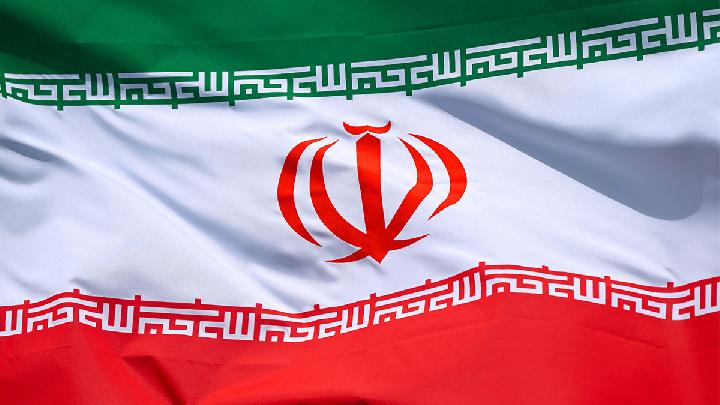
TEMPO.CO, Jakarta - Iranian Foreign Minister Abbas Araghchi said there has been "no recent contact" with United States (US) envoy Steve Witkoff amid growing concerns of a possible US attack on Tehran.
"There was no contact between me and Witkoff in recent days and no request for negotiations was made from us," Araghchi told state media, as quoted by the Fars News Agency, as quoted by Anadolu Agency on Wednesday.
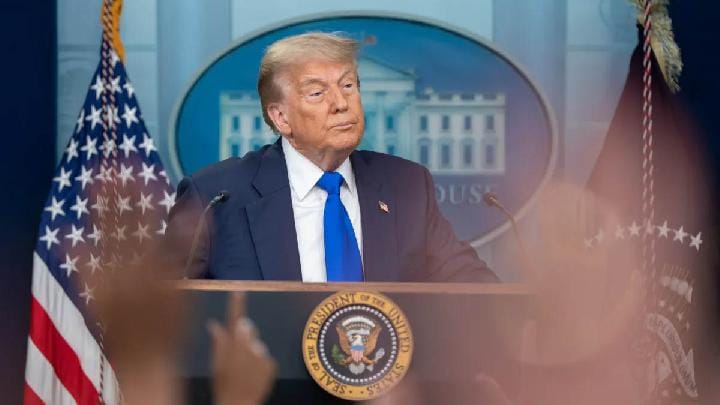
The day before, US President Donald Trump said another "armada" was heading toward Iran. He also claimed that Tehran was seeking a diplomatic solution with Washington.
"They want to make a deal. I know that. They’ve called many times… they want to talk," Trump told Axios.
Later on Wednesday, Trump said the flotilla, led by the aircraft carrier USS Abraham Lincoln, was larger than the one deployed to Venezuela earlier this month before the ouster of Nicolas Maduro. He warned that the flotilla was "ready to fulfill its mission immediately and by force if necessary."
"Hopefully Iran will quickly ‘come to the table’ and negotiate a fair and equitable deal – NO NUCLEAR WEAPONS – one that is good for all parties," Trump wrote, as reported by Anadolu. "Time is running out; it is truly of the essence."
Araghchi said the country's armed forces are fully prepared and "fingers on the trigger" to "immediately and powerfully respond to any aggression" by land, sea, or air.
"The valuable lessons learned from the 12-Day War have enabled us to respond even more strongly, rapidly, and profoundly," the senior Iranian diplomat said in a post on the US social media company X.
"At the same time, Iran has always welcomed a mutually beneficial, fair, and equitable NUCLEAR DEAL—on equal footing, and free from coercion, threats, and intimidation—which ensures Iran’s rights to PEACEFUL nuclear technology and guarantees NO NUCLEAR WEAPONS."
Araghchi emphasized that nuclear weapons have no place in Iran's security doctrine and said Tehran has "never sought to acquire them."
Ali Shamkhani, a senior adviser to Iran's Supreme Leader Ayatollah Ali Khamenei, also responded to Trump's remarks, dismissing the idea of a "limited strike" as "illusion" and warning that any US military action would mark the "beginning of a war."
The former top security official said that any "aggression" against Iran would trigger an "immediate and unprecedented" response, targeting not only the aggressor but also "all its supporters and the heart of Tel Aviv."
In a separate warning, a senior Iranian lawmaker said assets linked to the "Trump Organization" could become "legitimate targets" if the US launches an attack on Iran.
Ebrahim Azizi, head of the Iranian parliament's national security and foreign policy committee, said he had "a piece of advice" for Trump's business partners.
"The Trump Organization may have experienced seventeen-fold growth last year, but it will no longer be a safe partner for you," Azizi wrote on social media. “The first US miscalculation against Iran will expand the range of our legitimate targets.”
The lawmaker did not specify which “partners” he was referring to or where they are based.
Separately, the spokesman for the Islamic Revolutionary Guard Corps (IRGC), Brigadier General Ali Mohammad Naeini, said that the US is “seeking to stir tensions and inject artificial fear into Iranian society.”
“The experience of the 12-day war showed that the military option against Iran has failed, and it is the armed forces of the Islamic Republic that determine the endgame of any war through initiative and action,” he said.
Commenting on the US military flotilla heading towards Iran, the IRGC spokesman said that “intimidation through war imagery and the deployment of aircraft carriers” is an “old tactic” used by the US.
He further said that the Iranian armed forces have “full control over the situation on the battlefield” and have “action plans for all of its scenarios.”
Dragging Neighboring Countries
Araghchi said a number of countries are acting as intermediaries and maintaining contact with Iran, noting that many countries in the region share concerns about rising tensions.
"Countries in the region understand that any military threat in any form will destabilize the entire region," he warned.
Several countries in the region, including Saudi Arabia, Qatar, and the United Arab Emirates, have stated that they will not allow their airspace to be used for any attack on Iran.
Araghchi called on the US to abandon what he described as threats, excessive demands, and raising "unreasonable issues," arguing that negotiations have their own principles and must take place on an equal footing.
"Negotiations under threat will not succeed," he said, adding that although many figures and countries have expressed interest in mediating or have already made contact, Iran's stance "remains unchanged."
Tensions have escalated between Tehran and Washington following anti-government protests in Iran. The US administration has said that all options, including military action, remain open to dealing with Tehran.
Iranian officials have warned that any US attack would trigger a "swift and comprehensive" response.
Read: Trump Makes New Threats Against Iran Over Nuclear Deal
Click here to get the latest news updates from Tempo on Google News