TEMPO.CO, Jakarta - US Secretary of Defense Pete Hegseth on Thursday berated NATO alliance partners over their military spending and lack of initial support for the US war in Iran.
Addressing fellow defense ministers at NATO headquarters in Brussels, Hegseth doubled down on US President Donald Trump's threat to withdraw troops from Europe — where Washington stations them in order to aid in the defense of Europe, as well as to enable the more rapid projection of US military might abroad.
Hegseth said Washington would conduct a review to "examine America's force posture and basing in Europe."
Reporting from Brussels, DW correspondent Teri Schultz said that Hegseth "picked up the script where he left it in his highly critical speech in Normandy earlier this month."
"In an angry rebuke tied to dissatisfaction with the European response to President Trump's war on Iran, Hegseth announced a six-month process of reviewing the US defense posture in Europe, looking at the number of forces and presence on bases," she said.
"This comes, of course, on the heels of a sharp reduction in the assets the US will pledge to NATO's crisis plans, known as the Force Model."
Hegseth cites lack of support against Iran
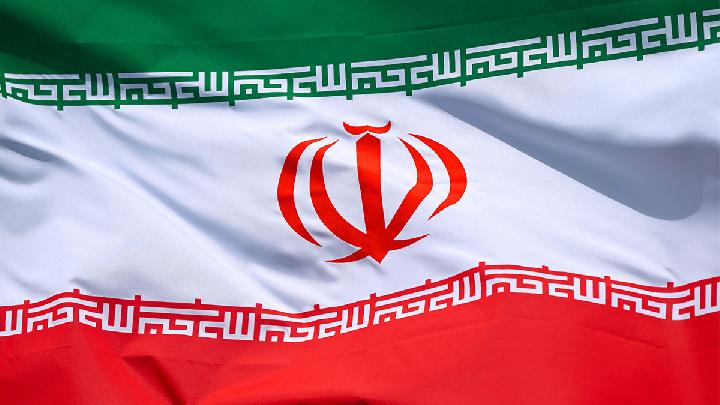
Hegseth also noted the distinct lack of enthusiasm for Trump's decision to attack Iran — which he did alongside Israel without consulting NATO allies.
Hegseth said that America's NATO partners had acted in a "shameful" way adding, "These allies… they put America's sons and daughters… our sons and daughters… at risk. There's no excuse for that."
Allies were caught flatfooted by Trump's decision to start an unannounced war with Iran without clear objectives, with some refusing to grant last-second requests regarding the use of NATO airspace and access to US bases in NATO countries like Italy.
Lastly, Hegseth threated that the US might consider withholding its own contributions to the military alliance if partners fail to meet spending targets, saying, "Where other allies do not spend with urgency, our dues contributions will go down."
"Some of NATO's largest economies, some of our richest countries, allies that are happiest to go on about the rules-based international order and middle powers banding together, still seem to think the era of free-riding is here," Hegseth added.
"This isn't what the president or America expects from this alliance. This is not what any reasonable person would expect. And it's not going to cut it anymore. And so we're doubling down on our effort to make NATO what it always was supposed to be."
NATO Secretary General Mark Rutte: 'We're in a really good place'
Despite the belligerent attitude of the US defense secretary, NATO Secretary General Mark Rutte claimed Thursday that everything is fine.
Rutte appeared unfazed by potential US troop withdrawals at a moment in which Russia's President Vladimir Putin is consistently badgering Europe while conducting his war of aggression in Ukraine.
"We are in a really good space," said Rutte, who noted that adjustments are already underway to compensate for the new US posture. "Some of this is already done, some of this is in progress. We are working on that."
Rutte also sought to make clear that the US drawdowns would not have a negative impact of European defenses.
"If war breaks out, clearly what all allies will do… including the United States… is max out whatever they can do. I have every confidence that we will fight that war. And we will win it."
Regarding budgets, Rutte said: "When it comes to spending, what we are seeing is staggering amounts of money coming in," he noted, pointing out that Canada and Europe had increased year-on-year spending by nearly 20% in 2025.
German Defense Minister Pistorius: 'We need time'
German Defense Minister Boris Pistorius on Thursday agreed that European allies would be capable of filling any security gaps left by a US withdrawal, but made clear that partners would not be able to shift posture overnight.
"By and large we'll be able to compensate for a lot, but we need a little more time," said Pistorius in Brussels.
Pistorius said, "it is difficult and dangerous for the security of NATO's European front when [military] capabilities are withdrawn very quickly and before it is clear when these can be replaced."
The German defense minister said NATO members would have to negotiate with their "American partners" to cover potential gaps in long-range weaponry for instance.
Pistorius also made note of the fact that a German minesweeper had passed through the Suez Canal on its way to the Strait of Hormuz to aid in the clearing of the international transport route.
Iran has held global oil supplies in a chokehold since the US launched its war on February 28 and Trump has been keen to have NATO allies assist in helping shipping traffic resume.
Germany had promised to help remove Iranian mines from the strait as soon as a peace deal between Washington and Tehran was in place. Such a document was signed yesterday, bringing about a temporary end to nearly 16 weeks of hostilities.
Read: NATO Chief Focuses on Alliance Unity After US Alters Pledges
Click here to get the latest news updates from Tempo on Google News