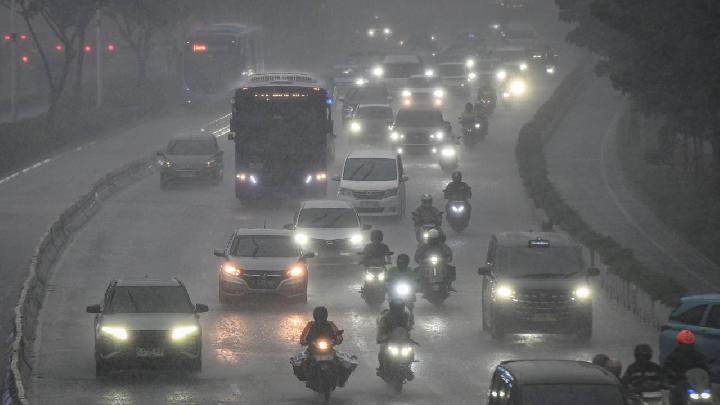
TEMPO.CO, Jakarta - The Meteorology, Climatology, and Geophysics Agency (BMKG) issued an early warning of potential light, moderate, and heavy rain, possibly accompanied by lightning and strong winds, in several major Indonesian cities on Saturday.
According to the official BMKG website, as quoted by ANTARA, forecaster Nazmi Nariyah explained that in general the convergence area extends from the Pacific Ocean east of the Philippines and the Indian Ocean west of Sumatra. These conditions can increase the potential for rain cloud growth in areas affected by convergence or confluence.
Therefore, BMKG predicts that several major cities may experience moderate to very heavy rain accompanied by lightning and strong winds, namely in the Tanjung Pinang, Padang, and Tanjung Selor areas.
Meanwhile, several other major cities will experience light to moderate rain, namely Banda Aceh, Medan, Pekanbaru, Jambi, Bengkulu, Palembang, Bandar Lampung, Serang, Bandung, Semarang, Pontianak, Palangkaraya, Samarinda, Denpasar, Kupang, Sorong, Nabire, and Jayapura.
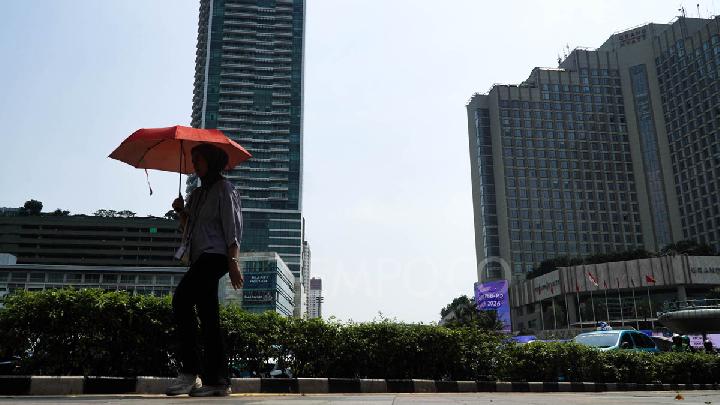
Meanwhile, major cities predicted to experience only cloudy conditions today include Jakarta, Banjarmasin, Mataram, Makassar, Kendari, Gorontalo, Manado, Ternate, Ambon, Manokwari, Jayawijaya and Merauke.
Previously on Thursday, June 18, Forestry Minister Raja Juli Antoni said that Indonesia's ability to control forest and land fires has improved over the last few El Nino cycles.
He explained that the number of forest and land fires during El Nino continues to decrease. During the 2015 El Nino event, the area affected by forest and land fires was recorded at around 2.61 million hectares. This figure dropped to 1.64 million hectares in 2019 and then to approximately 1.16 million hectares in 2023.
In the last two El Nino cycles, he continued, the area affected by forest and land fires was reduced by 55.6 percent compared to 2015.
Additionally, he said that the BMKG predicts that this year's dry season will arrive earlier, last longer, and be drier. The dry season is expected to peak from July to September.
Read: Indonesia's Dry Season Expands, Heavy Rain Unlikely Through June 22
Click here to get the latest news updates from Tempo on Google News
Indonesia's Dry Season Expands, Heavy Rain Unlikely Through June 22
1 hari lalu
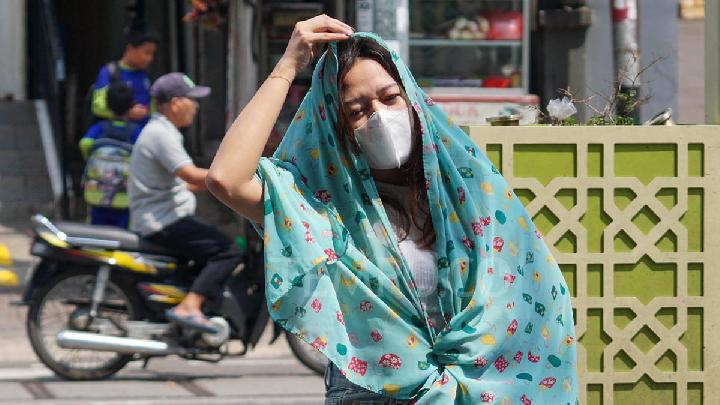
The dry season is expected to intensify due to El Nino conditions. The peak of drought in Indonesia is predicted to occur in August-September.
BMKG Reports 39% of West Java Experiencing Drought
5 hari lalu

Based on BMKG observations, there are 16 rain-free zones, including those in the northern coastal areas (Pantura).
BMKG Warns Convergence Could Trigger Heavy Rain in Several Indonesian Regions
9 hari lalu
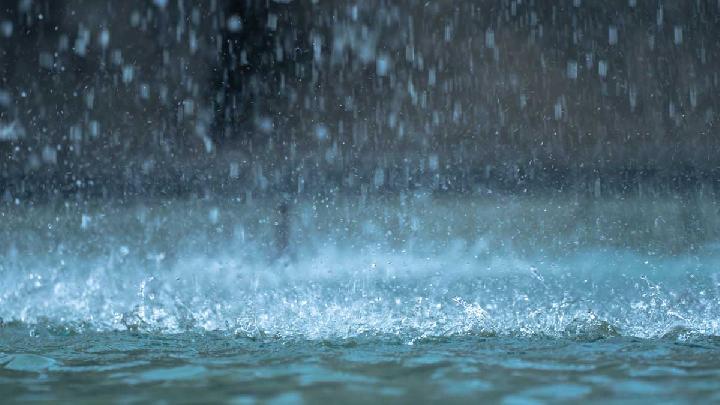
BMKG predicts heavy to very heavy rain in several regions due to the convergence and confluence.
In Northern Indonesia, Heavy Rain Persists as Country Enters Dry Season
9 hari lalu

According to BMKG, days without rain in the southern part of Indonesia are getting longer.
BMKG Forecasts Light Rain Across Several Indonesian Cities
11 hari lalu
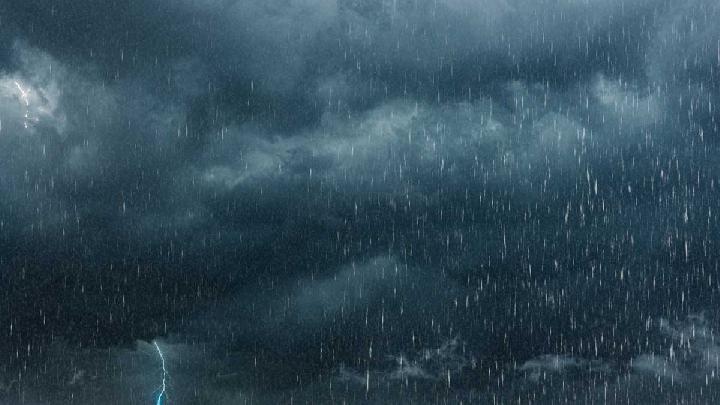
Atmospheric conditions raise the risk of heavy to very heavy rainfall in West Kalimantan, requiring increased preparedness.
BMKG: El Nino May Reduce Rainfall in West Java in Mid-June 2026
11 hari lalu

BMKG has warned that the El Nio phenomenon could reduce rainfall in parts of Indonesia, including West Java, during the week of June 8-14, 2026.
BMKG Forecasts Light Rain Across Most of Indonesia on Sunday
13 hari lalu
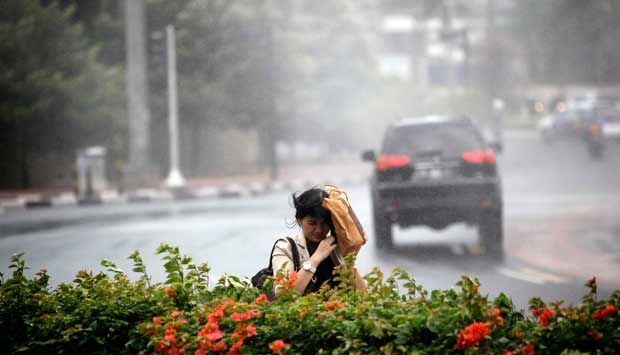
The Indonesian Meteorology, Climatology, and Geophysics Agency (BMKG) has predicted rain across most of Indonesia on Sunday, May 7, 2026.
BMKG Forecasts Rain in Several Parts of Jakarta Tonight
15 hari lalu
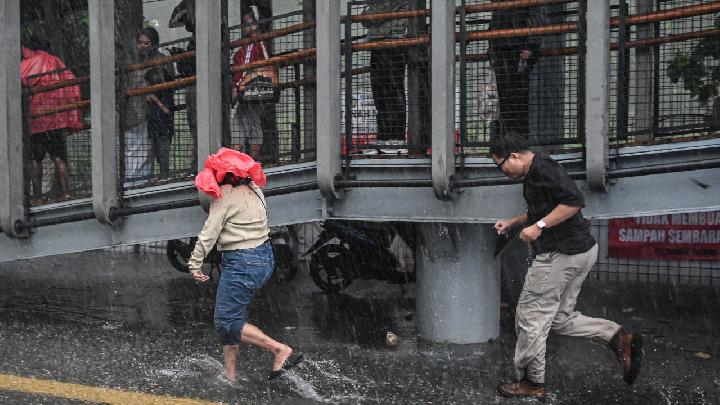
According to the BMKG weather forecast, several areas in Greater Jakarta have been experiencing rain since Thursday morning, June 4, 2026.
BMKG Reports Strengthening Australian Monsoon in Recent Days
18 hari lalu

The MJO's atmospheric dynamics are no longer present. However, some areas are still experiencing rain.
Heavy Rain Likely in Parts of West Java for Four Days: BMKG
19 hari lalu
The dynamics of the atmosphere are predicted to continue supporting an increase in water supply and the formation of convective clouds in parts of West Java.