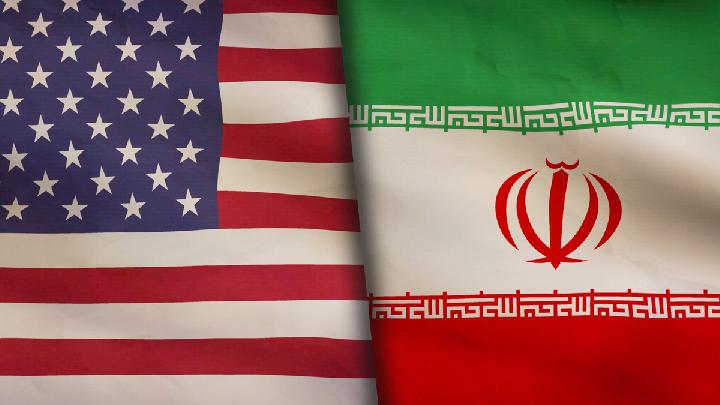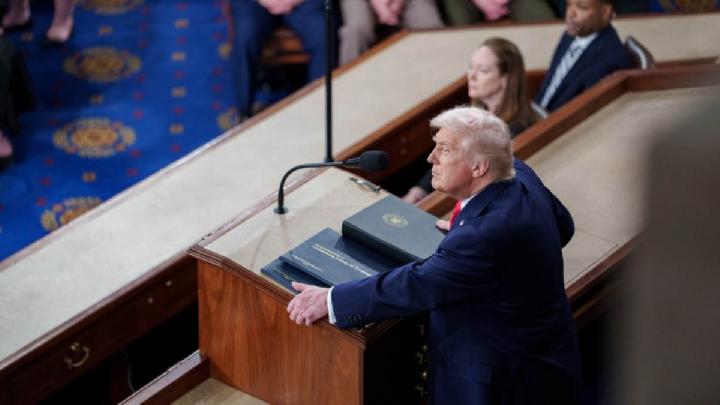
TEMPO.CO, Jakarta – The United States (US) Senate failed to pass a resolution aimed at limiting US President Donald Trump's war against Iran.
The latest war powers resolution failed by a 47-52 vote in a procedural vote, marking another major setback for supporters of limiting Trump's military activities abroad and underscoring Republicans' unwavering support for the president's military operations.
A separate resolution will be voted on in the US House of Representatives on Thursday, March 5, 2026, but it also faces tough odds.
Senate lawmakers spent all of Wednesday debating for and against asserting Congress's power to authorize or end Trump's military action against Iran.
Supporters of the resolution say Trump overstepped his constitutional authority by launching a war with Israel. Under Article II of the US Constitution, the president can only launch such an attack in self-defense in response to a direct threat. Otherwise, Congress has the sole power to declare war.
Speaking on the Senate floor, Senator Tim Kaine argued that, "even in a classified setting," the Trump administration "could produce no evidence, none that the US was under an imminent threat of attack from Iran."
"You can’t stand up and say: This is a pinprick that doesn’t lead to the level that would be characterised as war,'" Kaine said, as reported by Al Jazeera. "You can’t stand up and say: This is one and done, and no troops are engaged in hostilities against Iran.'"
Republicans Back Trump
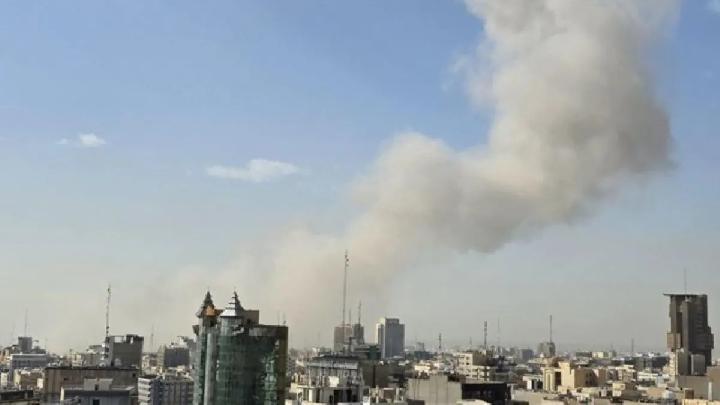
Since launching the military strikes on February 28, the Trump administration has offered a series of reasons why war is necessary now.
Trump claimed that Iran is trying to rebuild its nuclear program, which he said was "obliterated" in last year's attack. He also claimed that Iran is trying to develop long-range missiles to attack the US.
Meanwhile, Secretary of State Marco Rubio told reporters that Israel was planning to attack Iran, which would likely lead to retaliation against US assets in the region.
Trump later denied the claims, saying that Iran was planning an imminent attack on Israel.
To support these claims, the Trump administration has also sought to frame Iran's entire military and nuclear energy program since the 1979 Islamic revolution as a direct threat to the US.
Several Republicans opposed the resolution, arguing that 47 years of military threats from Iran justified the president's military action.
According to Senator James Risch, the Constitution "clearly gives the president not only the right, but indeed the duty, as does his oath to protect the United States."
Risch also pointed to Iran's efforts to rebuild its nuclear energy assets after the US attack last June, which was carried out as part of the Israeli-led 12-Day War.
"The commander-in-chief ordered this attack because of the increase in the manufacturing of long, medium-range missiles — and after [Iran tried] to restart the nuclear programme that was decimated in the 12-day war," Risch claimed.
The US and Iran had been in negotiations to curtail Iran's nuclear program ahead of this month's war, but Risch dismissed the efforts as a sham.
"All this time, they had us sitting at the table, dragging out and yakking away at negotiations that were going absolutely nowhere," he told the Senate, calling on his fellow lawmakers to reject the resolution on Wednesday.
The vote, which largely split along party lines except for one Republican and one Democrat who broke away, was the latest in a series of failed war powers resolutions in Congress. Since the June 21 attacks, Congress has introduced several measures to stop Trump from pursuing military campaigns in Iran and Venezuela, but to no avail.
Under the War Powers Act of 1973, a US president must seek congressional approval after deploying US troops for military action lasting more than 60 days.
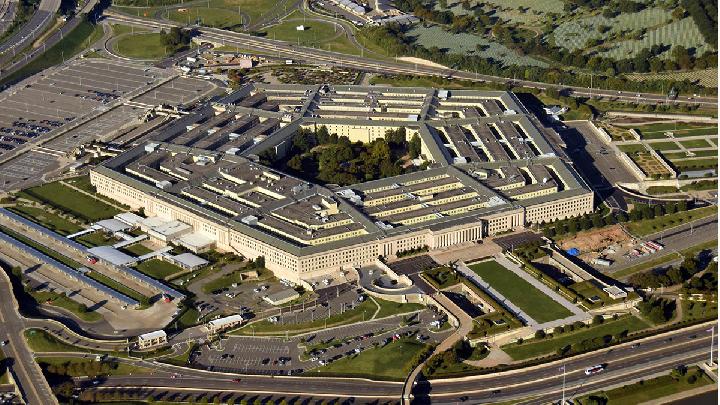
Earlier on Wednesday, Pentagon chief Pete Hegseth argued that the US operation had just begun, with more US assets being sent to the region.
The duration and scope of the conflict remain unclear, although Trump himself estimated it could last “four to five weeks.” However, Risch expressed optimism that the conflict would be resolved quickly.
“This is going to end, and it’s going to end rapidly. This is not a forever war, indeed, not even close to it,” Risch claimed. “This is going to end very quickly.”
Why the Vote on the War Powers Resolution Still Matters
Even if Wednesday's effort succeeds, the Senate war powers resolution will face a significant challenge before it can become law.
Both chambers would need to pass the resolution before it could go to the president's desk for final signature—but even then, Trump could veto the measure.
Only a two-thirds majority in both chambers can override a presidential veto.
Nevertheless, advocates have long argued that such resolutions force lawmakers to confront important questions about the limits of presidential power, even if the odds are slim.
The resolutions also give constituents a reason to petition their elected officials and voice their concerns about the war.
They also give constituents a reason to petition their elected officials and voice their concerns about the war.
“While the outcome did not pass, this moment underscores a core truth: Congress must continually reassert its constitutional role to check executive power and prevent endless wars,” Hassan El-Tayyab, legislative director for Middle East policy at the Friends Committee on National Legislation, a Washington-based nonprofit, told Al Jazeera.
“Our founders warned that unchecked authority leads to unchecked conflict. Senators and Representatives must keep forcing votes to curb US military engagement in unauthorised wars.”
Cavan Kharrazian, senior policy advisor for the advocacy group Demand Progress, also pointed out that voting in Congress can help inform voters about their representatives’ stances on important issues.
That, in turn, can have political consequences at the ballot box, especially in an election year.
“The American people will remember who voted to continue an illegal, unnecessary war,” Kharrazian said.
“Every senator who voted against the war powers resolution also voted against the wishes of the American people and against the safety of the service members they are sworn to protect. The stakes are clear, and there is no more time for political games.”
Read: Prabowo Discusses US-Iran Conflict with Former President and Foreign Ministers
Click here to get the latest news updates from Tempo on Google News