TEMPO.CO, Jakarta - Shadow economy is a growing threat to fiscal stability in Indonesia, said fiscal policy researcher from the Faculty of Economics and Business at Gadjah Mada University (UGM) Yogyakarta, Rijadh Djatu Winardi. He warns the Indonesian government that intentional "hidden" economic activities could lead to significant state losses.
"This could potentially open a yawning loophole for money laundering schemes," he said on Tuesday, January 27, 2026, referring to shadow economic activities.
According to Rijadh, the shadow economy encompasses all legal and illegal economic activities that forgo official business registration to avoid taxes, regulations, and administrative procedures.
Rijadh explains that current government projection of Gross Domestic Product (GDP) fails to reflect the actual conditions due to unrecorded transactions, both at the grassroots level, including street vendors, and e-commerce merchants.
"Whether legal or illegal, shadow economy that should have been reported and taxed is unrecorded. If left unchecked, it will eventually damage the economic structure, reduce state revenues, and weaken social protection," said Rijadh.
This forensic accounting expert underscores the emergence of digital shadow economy that exploits the dark web and cyber anonymity. These activities often involve credit card fraud, hacking, and the trade of illegally imported goods that harms the competitiveness of legitimate businesses.
If the shadow economy manages to take up 20 to 30 percent of the proportion, Indonesia, he said, could potentially lose 2 to 3 percent of GDP.
Legally, there is a strong connection between shadow economic activities and financial crimes. According to Rijadh, illegal economic actors often obscure the source of their funds to be able to spend them again without arousing suspicion from authorities.
"Money laundering cannot happen in the absence of a crime, and when the shadow economic activity is a crime, there is clearly a strong relations between the two. The bigger the shadow economy, the higher the risk of money laundering," added Rijadh.
Despite the significant challenges, especially in developing countries with dominant informal sectors, Rijadh deems the country to have taken some mitigatory measures through digital technology innovations.
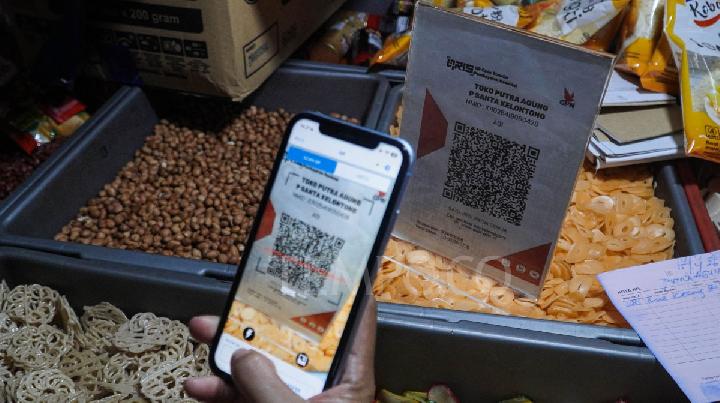
The use of QRIS and reduced cash transactions are seen as effective methods to narrow the space for shadow economic activities due to their more traceable nature.
"Using QRIS, encouraging non-cash transactions, is one way to reduce the shadow economy. Because high shadow economy practices tend to have low digital adoption. And there's Coretax," he said.
He also urges the government to fortify regulations and state institutions to encourage the transition from the informal sector to the formal sector, in order to create a healthier business competition. This will also ensure a more equitable economic development.
Read: Indonesia's 2025 Budget Deficit Seen Widening to 2.92% of GDP
Click here to get the latest news updates from Tempo on Google News