With the support of the global community, the people of Raja Ampat are trying to save the zebra shark from the threat of extinction.
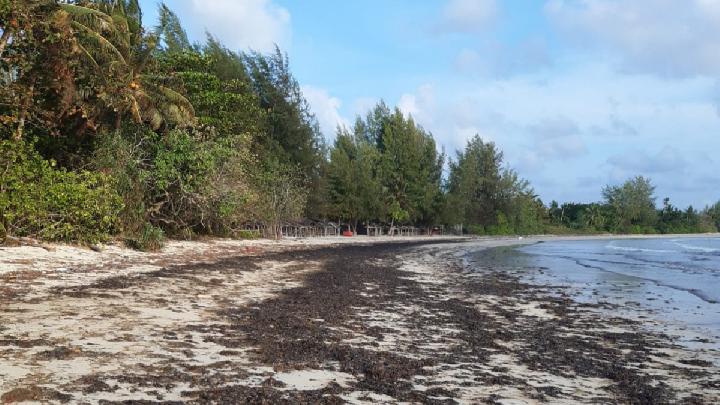
AT a time of massive natural damage caused by the extractive industry and weak environmental management, there is good news from Raja Ampat, Southwest Papua. Through the Stegostoma tigrinum Augmentation and Recovery (StAR) Project, the ReShark global coalition together with the local community is trying to save the zebra shark from the very edge of extinction.
This good news is more important because at the same time the threat to the Raja Ampat ecosystem—known as the heart of the world’s coral triangle—is intensifying. In another corner of the archipelago, for example, nickel mining continues and has the potential to change the landscape and reduce the quality of the maritime environment that has long been a home for thousands of species.
Since the StAR Project began in 2022, more than 50 zebra sharks have been released back into the waters of Raja Ampat. According to the International Union for Conservation of Nature (IUCN), the population of zebra sharks in the six-million hectare region had previously fallen to around 20 individuals. This was a result of hunting in the 1990s and the beginning of the 2000s, when zebra sharks were caught for their meat, fins and liver oil.
In order to restore the population, ReShark has set a target for the release of 500 zebra sharks up until the year 2032. The eggs of the sharks, sometimes known as leatherback sharks, are bought in from Australia to Kri Island. There, they are raised until they reach a length of 1 meter before being released into their natural habitat.
We can learn an important lesson from Raja Ampat: conservation initiatives in this nation are often more effective when they are undertaken by non-government organizations together with local people. In many instances, conservation efforts, including in marine ecosystems, are the results of collaboration between communities, NGOs and international partners.
Depending solely on the government to lead the conservation agenda, on land or at sea, is like wishing for the moon. In practice, the commitment to environmental protection comes second to the natural resource exploitation agenda, which is considered as bringing about more rapid economic growth. The low priority given to conservation is reflected in the limited funding the state allocates to protect these vast conservation areas.
For example, the budget of the Forestry Ministry’s Directorate-General of Natural Resources and Ecosystem Conservation last year was only around Rp1.5 trillion, and that was Rp300 billion less than the year before. Most of this budget, 70 percent, was used for staffing costs, meaning that there was very little opportunity for environmental protection activities. This is despite the fact that Indonesia is conservation areas—both on land and at sea—cover tens of millions of hectares.
In the future, conservation will become more challenging along with increasing pressure to exploit resources in a number of regions. The StAR initiative in Raja Ampat shows that when government efforts to preserve nature are hesitant, local people are able to show there is hope for recovery. But without more commitment and a higher priority from the government, the success of conservation initiatives will be overtaken by a more massive rate of environmental destruction.