TEMPO.CO, Jakarta - Indonesia has secured its first direct export of frozen durian to China, marking a major milestone after nearly two years of negotiations and regulatory preparations.
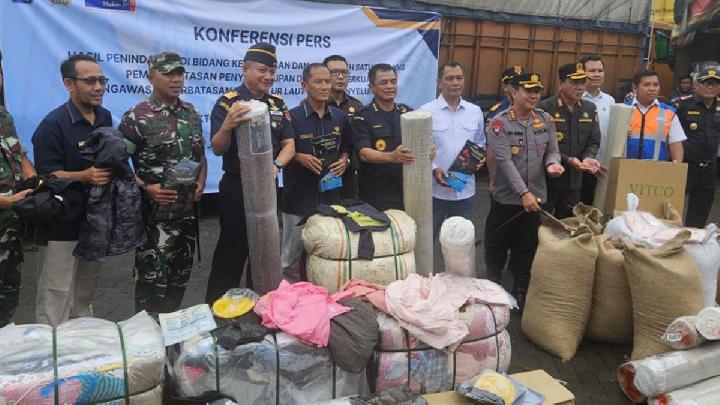
The inaugural shipment, totaling 48 tons and valued at Rp 5.1 billion, was released by Indonesia’s Quarantine Agency (Barantin) on Monday, December 15, 2025.
The breakthrough follows the signing of the Frozen Durian Export Protocol between Indonesia and China on May 25, 2025. The agreement was inked by Barantin head Sahat M. Panggabean and Sun Meijin, Minister of the General Administration of Customs of the People’s Republic of China (GACC).
“This is the first realization of frozen durian exports to China, the culmination of a lengthy and resource-intensive process,” Sahat said during the export release ceremony in Citereup, Bogor Regency, attended by local officials and members of Indonesia’s House of Representatives.
The frozen durians, processed in West Java, will be shipped from Tanjung Priok Port in Jakarta to Qingdao Port in China. Sahat said the export aligns with President Prabowo Subianto’s national development priorities, particularly the push for downstream processing to increase the added value of Indonesian agricultural commodities.
Barantin has promoted this approach through its Go Export program, which supports Indonesian agricultural products in meeting international market standards.
Entering a Competitive Market
China is the world’s largest consumer market for durian, with demand far exceeding domestic supply. Until now, Chinese consumers have largely relied on frozen durian imports from Southeast Asian producers such as Thailand, Malaysia, Vietnam, and the Philippines.
Sahat said Indonesia’s durian, known for its distinctive flavor, has strong appeal among Chinese consumers. However, Indonesian exporters previously supplied durians mainly to neighboring countries, where the fruit was processed and re-exported to China.
Recognizing this opportunity, Barantin initiated government-to-government talks with GACC to open direct access for Indonesian frozen durians.
The discussions culminated in the signing of the export protocol after nearly two years of coordination involving the Ministry of Agriculture, the National Food Agency, and other relevant institutions.
Strict Quarantine and Traceability Standards
Acting Deputy for Plant Quarantine Drama Panca Putra said traceability and food safety are central to the export scheme. Frozen durian packaging facilities must comply with Indonesian Quarantine Agency Regulation No. 15 of 2024 on Plant Quarantine Installations (IKT).
To date, eight frozen durian packaging facilities have met the requirements to be designated as IKT export facilities. Seven are located in Central Sulawesi and one in Bogor Regency, West Java. All eight operators are registered in China’s Import Food Enterprise Registration system.
Under the protocol, eligible frozen durian products include durian pulp, durian puree, and whole durians derived from fresh, fully mature fruit grown in Indonesia.
After processing, the durians must be quick-frozen at minus 30 degrees Celsius or lower and maintained at a core temperature of at least minus 18 degrees Celsius. Each shipment must undergo strict manual selection to remove damaged fruit and ensure it is free from contaminants.
Exporters must also meet additional requirements, including owning or partnering with registered durian plantations, securing packaging house certification from regional food safety authorities, and obtaining designation as an export facility from Barantin. Approved companies are then recommended to GACC for final registration.
Strong Export Prospects
According to Barantin data recorded in the BEST TRUST certification system, Indonesia exported 10,162 tons of durian products between January and November 2025.
Major destinations included Thailand, China, Malaysia, Hong Kong, and Germany, with smaller volumes shipped to markets such as Japan, Taiwan, Saudi Arabia, the United States, and several European countries.
Aditya Pradewo, secretary-general of the Indonesian Durian Plantation Association (Apdurin), said industry players welcomed the opening of direct exports to China. He estimated China’s durian market to be worth around US$8 billion, or roughly Rp 128 trillion, annually.
“With superior varieties such as Bawor, Super Tembaga, and Namlung, Indonesia is optimistic about capturing 5 to 10 percent of the Chinese market,” Aditya said, adding that this could generate between Rp 6.4 trillion and Rp 12.8 trillion in annual foreign exchange earnings.
Muchlido Apriliast, owner of PT Zarafa Ridho Lestari, said the new protocol has also significantly reduced logistics costs.
Previously, exporters had to ship frozen durians to China via Thailand at a cost of around US$18,000 per container. Direct exports now cost between US$10,000 and US$11,000 per container, saving about US$8,000 per shipment.
Sahat praised the collaboration among farmers, businesses, local governments, and state institutions that made the export possible.
“We must continue to prioritize collaboration and harmonization to create greater economic value and improve the welfare of our farmers, especially Indonesia’s durian growers,” he said.
Read: Apindo Talks of Business Impact of Indonesia's OECD Bid
Click here to get the latest news updates from Tempo on Google News